

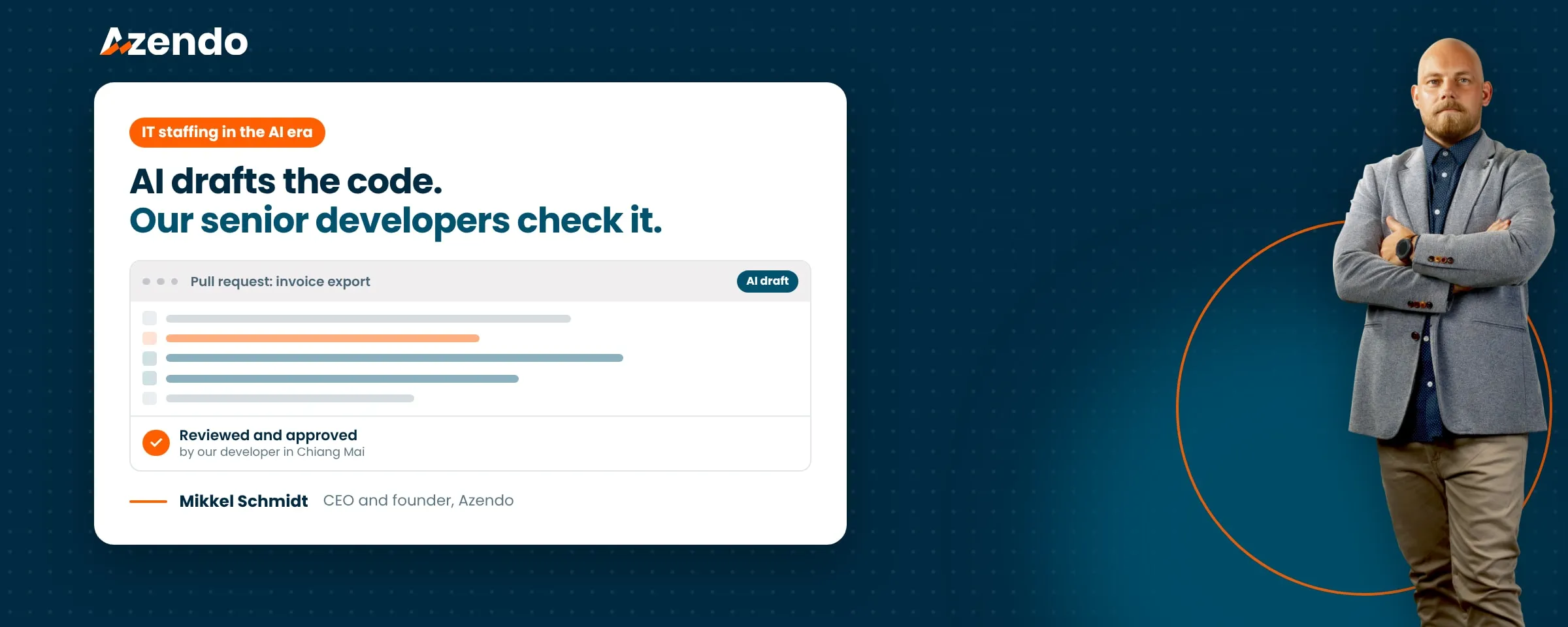
What IT staffing means in 2026
A provider adds developers or engineers to your team, or builds a whole dedicated software development team for you, so you skip the hiring round for each seat. That part is old news. But the work those people do all day has changed a lot in two years. So has the budget.
I’ve run a software company in Thailand since 2010. The conversations I have with CTOs this autumn sound different from even two years ago. Fewer of them ask how many developers the budget buys. More want to know who checks the code the AI writes. And they want to keep the team small, because the board is watching every cost.
What AI changed in IT staffing: companies hire for judgement
Most software teams use AI every day now. In Stack Overflow’s 2025 survey, 84% of developers used AI tools or planned to.
Hiring has changed with it. Indeed’s Hiring Lab reports that US software development postings grew by almost 15% between late February 2025 and July 2026. In the same period, postings overall fell 7%. Senior roles made up 71% of the increase from May 2025 to May 2026. Stanford’s Digital Economy Lab sees the other side. In the jobs where AI can do the most, employment of 22 to 25 year olds is 19% lower than it would otherwise be. The main reason is that companies hire fewer of them.
We see the same in our own work. And at networking events and industry meetings this year, people told us the same story again and again. In tech, AI is taking over junior roles. In marketing it’s the other way round: companies ask for more juniors and fewer seniors.
Kasper, our COO, sees it from the operations side:
Looking at AI from an operational point of view, it makes sense that AI replaces juniors, as seniors are the only ones able to do an actual quality check. But we believe this trend will even out over the next couple of years.
 KasperCOO, Azendo
What AI did to software hiring
Writing code got a lot faster. Checking it didn’t, and developers know it: in Stack Overflow’s 2025 survey, 46% don’t trust the accuracy of what their AI tools produce. We went through the controlled trials behind this in our research on whether AI will replace developers.
That changes who you want on an IT staffing team. A team of juniors turning tickets into code is doing the part AI now does fastest. The people who are hard to find can split a feature into small pieces that are easy to review. They read a pull request carefully and question it. And they take responsibility for what goes live.

Will AI shrink IT staffing? What the US job market says
The official outlook for developers is good. The US Bureau of Labor Statistics expects 10% more jobs for software developers, QA analysts and testers from 2025 to 2035. For all jobs it’s 3.5% (BLS).
I think AI will create more jobs than it takes.
AI makes it possible to build faster, so companies ship more, and many more startups get started. When output goes up like that, it creates jobs over time. AI will replace some roles, but I believe it creates just as many, maybe more, at the other end.
 Mikkel SchmidtCEO and founder, Azendo
Why cost pressure pushes IT staffing offshore
The people companies now want most are also the most expensive to hire at home. In the US, Western Europe and Australia, an experienced developer costs a full salary. On top of that come benefits, payroll taxes, a recruiter’s fee, a desk and a laptop.
Salaries in Thailand are lower, and the gap is wide enough to put experience within reach. With us, a client pays around 50% less than hiring the same specialist in-house. That figure already includes the office, the equipment, HR and payroll, training and the person who runs delivery. When you compare offshore staffing services, check what sits inside each fee.
What sits inside the cost of a developer
- Salary, benefits and payroll taxes
- Recruitment fees and months of searching
- Office space, equipment and software
- Your own time to manage, coach and keep them
- Around 50% less than the in-house cost
- Headhunting and assessment included
- Office, equipment, HR and payroll included
- Training, Talent Success and a service delivery manager included
You’ll find providers who promise bigger savings. The usual way to get there is to pay people less, and you see it later in turnover. We pay our people well. That’s how we keep them, and how we get the best engineers to join us. We’re not the cheapest provider in the industry, and we don’t sell cheap labour. Personally, I’d rather pay half the cost of an in-house hire for someone who stays for years. A lower rate with a new face every six months costs more in the end.
The blend: AI tools plus an offshore software team
The setup I see working best starts with AI tools drafting code, tests and documentation. Experienced developers on an offshore software team direct those tools and check every change. Around them, a managed service takes care of everything that isn’t product work.
Who does what in an AI-ready offshore software team
- YouSet the roadmap and the priorities, and sign off what ships. The code is yours.
- AI toolsDraft code, tests, migrations and documentation from the developer's instructions.
- Our developerSplits the work, directs the tools, reviews every change and owns it into production.
- ReviewAnything almost right goes back. Security, architecture and edge cases get a person's eyes.
- Service delivery managerRuns delivery with you, follows the weekly score and steps in at the first dip.
Every specialist we hire gets AI training in our Talent Success and Academy programme. So they’re ready to work with AI from day one on a client’s team. Companies building AI products can also get a dedicated AI engineering team from us. A good developer treats AI output as a first draft and catches the answers that are almost right. That’s a big part of the job today.
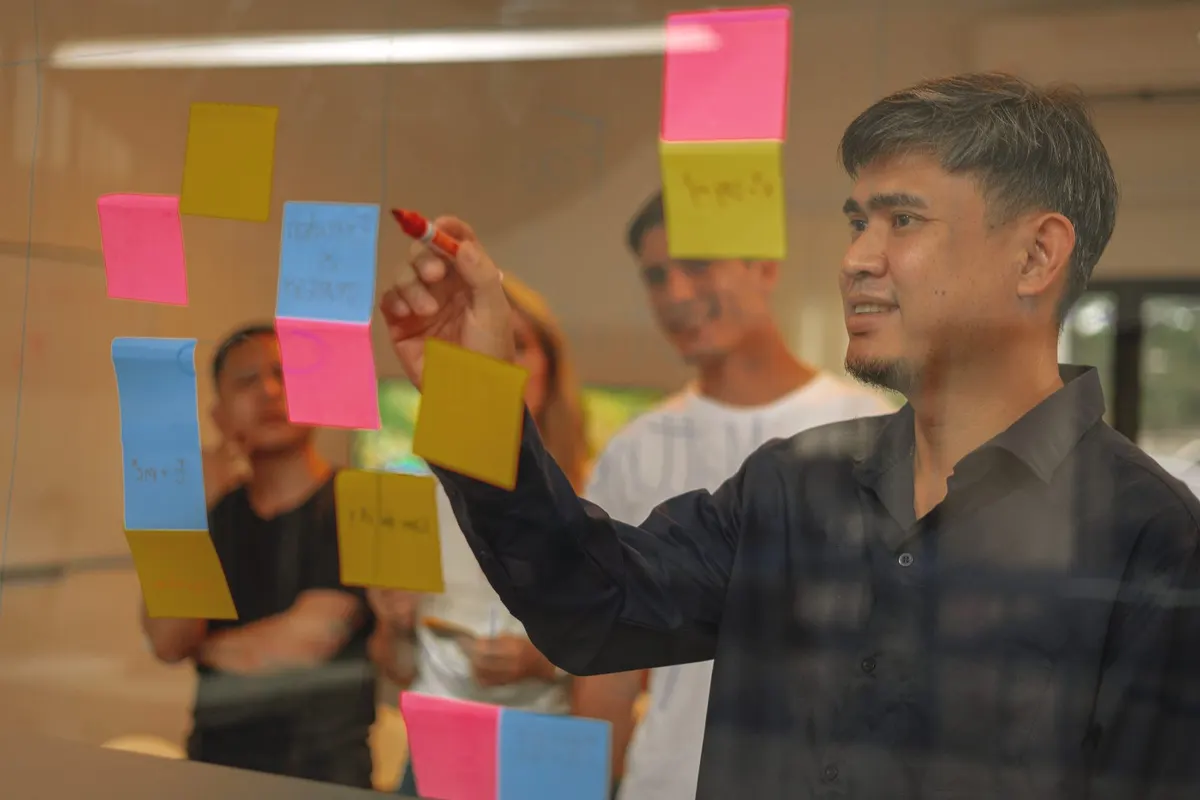
What you get is a small remote team with a lot of experience. It can be developers only, or include a dedicated QA team or a dedicated DevOps team as the product grows. They work inside your tools and your channels, and the monthly cost is one your finance director can accept.
How much management IT staffing takes, and who carries it
With plain staffing, the provider supplies a person and you manage them. It is often sold as IT staff augmentation services. We estimate that takes four to eight hours of your time per specialist every week. Three developers at the low end is twelve hours a week, and it usually lands on your best engineer.
Your management hours a week under plain staffing
Those hours never show on the provider’s invoice. That’s why so many offshore arrangements look like a bargain in the proposal and expensive by month six. We work through the numbers in staff augmentation vs managed services.
A managed service moves that load. At Azendo a service delivery manager runs the team and is responsible for delivery. You score our work every Friday, and every two weeks our Head of Delivery sits down with you for a 1:1. Your part is the direction and the sign-off.
What puts an IT staffing partner in the top tier
Finding a developer in Southeast Asia isn’t hard. Keeping a good one happy and productive on your product for years takes a lot of work, and we’ve spent sixteen years on it. That’s why I’m comfortable putting Azendo in the top tier of IT staffing in the region. We select one in twenty-five candidates, every team has a service delivery manager, and our specialists stay 3.3 years on average. We offer IT staffing only as a fully managed service.
The service layer around every specialist we assign
- SelectionOne in twenty-fiveRoughly one in twenty-five candidates who enter our assessment reaches a client team, tested on skills, mindset and culture fit.
- DeliveryA service delivery manager on every teamThey run the team and are responsible for delivery. Our Head of Delivery meets you every two weeks.
- Talent Success and trainingA plan built around your goalsAI training for everyone, and a development plan built every quarter around the company OKRs and team goals you share with us, with coaching in between.
- Follow-upCheck-ins every two weeksWith you, the team member and their peers. Anything you rate below four on Friday gets a response.
- Continuity3.3 years on averageOur specialists stay with us for 3.3 years on average, so what they learn about your product stays with it.
Danish management sets the tone. We say what we see, to clients and team members alike, and we deal with problems while they’re small. A developer who is struggling hears it from us with a plan attached, long before a client has to raise it.
We’re also the employer. Contracts, payroll, benefits and leave sit with us, along with the office, the kit and the team events.
Why Thailand is the future of IT staffing
I believe Thailand is where IT staffing is heading, and the government is one of the main reasons. It has a clear plan to make Thailand the tech hub of Southeast Asia. To get there, it’s spending a lot on tech and on tech education.
The plan is backed by real money and real targets:
Thailand's push to become a tech hub
- July 2022National AI Strategy approved by the Cabinet, running to 2027.
- January 2025AWS opens a Thailand region, with a planned investment of more than US$5 billion.
- 2025New targets from a committee led by the Prime Minister: ten million Thais with AI skills, 90,000 AI professionals and 50,000 AI developers.
- 2025THAI Academy, run by the government with Microsoft, trains 1.577 million people in its first year.
Big tech companies are coming too. Agoda built its largest office in Bangkok, for nearly 4,000 people. We wrote about all of this in our post on AI in Thailand.
For a company looking at IT staffing, that means a talent pool that grows fast and is well trained. And Thailand is still under the radar. Most buyers know India and the Philippines, and many companies hire there. Here there’s less competition for the best engineers, and in our experience the talent is just as good, often better. That makes it a strong place to build an offshore development team. We hire for each client team, and only about one in twenty-five candidates who start our assessment gets through.
The time zone works for most of our clients. Thailand is UTC+7, six hours ahead of Northern Europe in winter and five in summer, so a European morning is the team’s afternoon. For Sydney, most of the day overlaps. We have offices in Chiang Mai and Bangkok with around a hundred people, and we’re BOI-registered. There’s more on the country in why we deliver from Thailand.
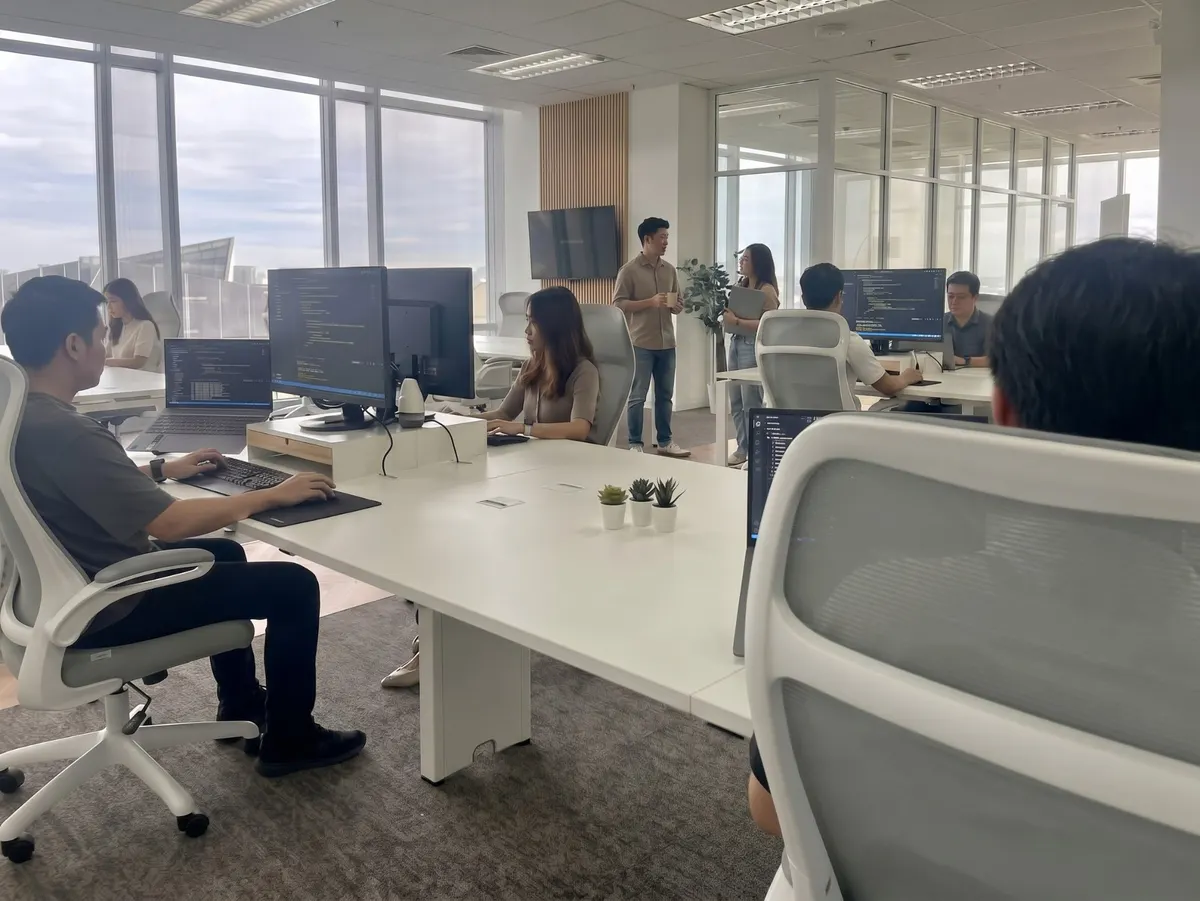
A checklist for choosing IT staffing in 2026
Before you sign with anyone, us included, ask these six questions.
Six questions to ask any IT staffing provider
- How experienced are the people?And how was that tested? With AI doing the drafting, review skills are what you pay for.
- Are they trained to work with AI?And how do they check what the tools produce?
- Who explains a late sprint?If it's your engineering manager, budget for those hours.
- How long do people stay?And what happens when someone leaves?
- What's the total cost?The rate, plus your own management time, plus the cost of each restart.
- What do you pay before the right person is in place?Ask this one last.
Our answer to the last one is nothing. There’s no deposit and no upfront fee. We start the search at our own risk, and our time to hire is four weeks from signing. If we don’t find the people you need in the agreed time, you walk away owing nothing.
Our page on offshore IT staffing shows what the monthly fee includes and how we hire for your stack. Companies that want developers fully managed from day one can hire dedicated developers through a team we run for them.
Sources
- Stack Overflow, 2025 Developer Survey: AI, July 2025.
- Indeed Hiring Lab, AI and Job Postings: From Destruction to Creation?, July 2026.
- US Bureau of Labor Statistics, Occupational Outlook Handbook: Software Developers, Quality Assurance Analysts, and Testers, August 2026.
- NECTEC, Cabinet approves the National AI Strategy; Bangkok Post, Thailand aims for AI literacy for 10 million; Microsoft, THAI Academy results; Amazon, AWS launches its Thailand region; iTBrief Asia, Agoda’s Bangkok technology hub.
- Brynjolfsson, Chandar and Chen (Stanford Digital Economy Lab), Canaries in the Coal Mine? Six Facts about the Recent Employment Effects of Artificial Intelligence, revised August 2026.

