
If you’re curious about building with offshore tech talent, I’d encourage you to look past the first question most people ask, which is where the developers are. The question that decides how it goes is who looks after them once they’ve started, and who you call when something isn’t right. I’ve built Azendo around that second question. At the end of this post are five questions you can put to any provider, us included.
What a dedicated software team is
In general, a dedicated software team is a group of developers, engineers and designers who work full time on one client’s software product. They join your stand-ups, work in your repositories and on your board, and take their priorities from you. Their week isn’t shared with another client, so what they learn about your product stays on your product.
A team can start with one full-time developer and grow from there. Technical direction stays with you or your own lead: you decide what gets built and review the work, and the code is yours. What varies a lot from one arrangement to the next is who employs the people, who finds them and who looks after them once they’ve started. Those are the things that decide whether it works.
Four ways companies build a software team abroad
Companies that want developers in another country usually choose between four routes.
- Your own entity abroad. You set up a company, hire locally and run it with a country manager. It gives you full control and takes six months or more before work starts.
- An employer of record. A local firm employs the people you choose and handles payroll and contracts, while you recruit and manage them. Expect one to three months to get going.
- A standard placement. A provider finds a developer, introduces them and steps back. It’s the usual meaning of staffing, and it can work well with strong managers on your side.
- A managed dedicated software team. A provider finds, employs and manages the developers, and answers for how the team is doing. That’s how we work.
Project-based software development outsourcing, where an agency builds a defined scope for you, is a different thing again: you buy a result, not a team.
Where a standard placement ends, and where we keep going
In a standard placement, the managing becomes yours on the first day: onboarding, one-to-ones, reviews, and the difficult conversation when something isn’t working. It suits companies that have the managers and the time to run people themselves.
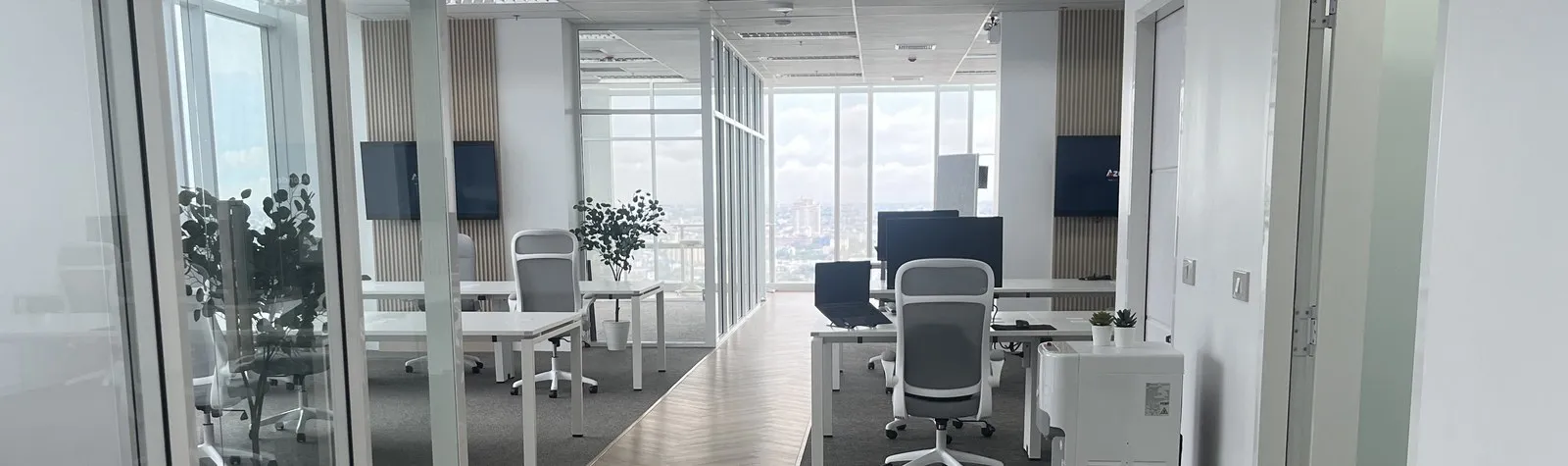
Staff augmentation is the commercial term for adding people to your team, and a dedicated software team is what you get when those people work only on your product. A standard placement is staff augmentation without the service around it. At Azendo, we deliver staff augmentation as a dedicated software team, fully managed. The developers on your team are our employees, working from our offices in Chiang Mai and Bangkok. We pay their salaries, provide their equipment and handle contracts, payroll, benefits and leave. For product engineering that’s our dedicated software development team, and the same model covers QA, DevOps, data, AI and design.
Who does the work after the developer starts
- You onboard the developer
- You run the one-to-ones and the reviews
- You notice when something slips, and fix it
- You plan their training and their next step
- You manage the conversation if someone isn't working out
- A Talent Success manager from day one
- Check-ins with every side, every two weeks
- A service delivery manager who steps in at the first dip
- A development plan, a growth track and a career plan for each person
- If someone isn't the right fit, we find the one who is
Before anyone starts, we carry the risk
Finding the right people is part of the service. We headhunt for your stack and run our own technical and mindset tests, as thoroughly as a specialist recruitment agency would, at no extra charge. Roughly 1 in 25 candidates who enter our assessment reach a client team, and you meet the people we put forward before anything is committed.
There’s no deposit and no upfront fee. We start the search at our own risk and expense, because we believe in the service. If we don’t find the people you need within the agreed hiring timeline, you walk away with no commitment and nothing to pay.
Someone looking after every developer from day one
The day a developer joins your team, they also get a Talent Success manager at Azendo. Every skill their role needs is scored from 1 to 10 and verified, and that profile becomes a development plan with skill and career goals. The plan can come to you for review before it’s approved, because you know what your product needs from them next.
A service delivery manager answers for what the team delivers, and the check-ins around every developer run on a fixed rhythm.
The rhythm around every developer we assign
- Every FridayYou score our overall performance, with feedback for the team and for each person. Anything below four gets a response.
- Every two weeksTalent Success checks in with every side: you, the team member and their peers, often with the service delivery manager in the same meeting. A separate well-being check-in looks after the person.
- Every monthCoaching against the development plan, with training aimed at the gaps.
- Every quarterA 360-degree review with input from the team member, their Azendo manager, their peers and you.
When a developer’s work starts to slip
Every team has bad weeks. Say you rate one of the developers on your team below four in the Friday survey, or mention in a check-in that their work keeps coming back from review. Your service delivery manager looks closely at that developer’s work the same week, and Talent Success talks to them and to the people around them. A dip has a cause, and you can’t always see it from where you sit.
What happens after a score below four
- YouScore a team member below four in Friday's survey, or raise a concern in a check-in.
- Service delivery managerReviews that team member's work closely the same week, from your feedback, their weekly report and their tracked hours.
- Talent SuccessTalks to the team member and their peers to find the cause, whether it's skills or the brief.
- You, the team member and AzendoAgree a plan, with training aimed at the gap and a clear expectation.
- Next check-inTwo weeks later, everyone looks at whether it's working. The plan is adjusted if it isn't.
- If it still isn't rightWe find the person who is the right fit and handle the handover.
I believe honest, direct feedback is what makes a team better. If you don’t know something needs to improve, you haven’t been given a real chance to improve it. So we tell our developers where they stand and what’s expected of them, and we tell you what we see, while it’s still small. Danish directness takes a week or two to get used to. After that, it saves everyone a lot of time.
Why our developers stay
Talent Success also tracks when someone is ready for more. It builds a live profile from skills, training and review history, so you see a developer’s next step coming before you have to ask. Every developer also has LinkedIn Learning through our partnership.
Our team members stay with Azendo for 3.3 years on average, so the knowledge someone builds about your codebase has years to pay off.
Around 100 people, by choice
We’re around 100 people across two offices. Large BPO and outsourcing providers can have thousands of people on their books, and that scale suits some kinds of work. For software teams, we’d rather know every person we assign well enough to notice when something changes.
We don’t sell cheap labour. Being based in Thailand keeps the cost reasonable, and our clients get that benefit, but we want to be chosen for the people we assign and how well we look after them.
The numbers behind our service
What the monthly fee covers
You pay one fixed monthly fee for an agreed number of hours, the same every month. It covers the search, delivery management, Talent Success, the office and equipment, and HR and payroll, with no management surcharge on top. With a standard placement, the managing still has a cost; it sits with you instead, at 4 to 8 hours a week per developer by our own estimate.
Our pricing page shows how the monthly fee is built for every role. A few examples, for mid-level developers working full time and fully managed:
- Backend, frontend or full stack developer: from USD 3,600 a month
- QA engineer: from USD 3,300 a month
- UX designer: from USD 3,400 a month
Junior and senior levels are priced in the proposal.
Five questions to ask any provider before you sign
Whoever you talk to, these answers tell you most of what you need to know.
- Who employs the developers, and who manages them day to day? If the answer to the second part is “you”, you’re looking at a standard placement.
- What happens in the first week a developer’s work slips? Listen for a named person, a timeframe and a plan.
- How do you select people, and how many candidates make it through? A provider that selects carefully knows its number.
- How long do your developers stay? Turnover is where product knowledge leaks away, so ask for an average in years.
- What’s inside the monthly fee, and what do I pay if you can’t find the right people? You want one number, and no bill for a search that didn’t work.
Starting your development team
A remote software team gives you the freedom to grow without filling an office, and a far wider pool of talent to choose from. Our job is to take the risk and the work of looking after the people off your hands.
A team starts four to six weeks after signing. Thailand is on UTC+7, five hours ahead of Northern Europe in summer and six in winter, so a European morning is the team’s afternoon. If you’d like to see what a software team could look like for your roadmap, drop us a message. A service delivery manager replies within one business day.

