



No Results Found
The page you requested could not be found. Try refining your search, or use the navigation above to locate the post.

We understand that software development is not a one-size-fits-all department. Every company has a unique tech stack, a specific company culture, and distinct long-term goals. Our approach to business process outsourcing is built on the foundation of 360-degree management. We don’t just find you a resume; we recruit, onboard, train, and nurture your offshore developers to ensure they are fully aligned with your vision.
By opting for an offshore workforce, you gain access to a global talent pool that is often unavailable in your local market. This allows you to bypass the intense local competition and high overhead costs of traditional hiring. With our support, you can build a full time offshore development team that is focused exclusively on your projects, giving you the consistency and quality you need to innovate.
The traditional model of hiring in-house for every single role is becoming less sustainable as the demand for niche technical skills rises. Outstaffing has proven to be a more agile and cost-effective way to manage growth. When you partner with a BPO company like Azendo, you are essentially removing the geographical barriers that limit your potential.
A full time offshore dev team provides the stability that freelance or project-based outsourcing often lacks. Because these individuals work solely for you, they develop a deep understanding of your codebase, your workflows, and your business objectives. This continuity is vital for complex software projects that require long-term maintenance and iterative improvements.
Managing a remote team does not have to be a logistical nightmare. We handle the heavy lifting, including legal compliance, payroll, and office infrastructure. This leaves you free to focus on product strategy and high-level decision-making. Our goal is to make the process of scaling your remote workforce as seamless as possible, providing a bridge between your local operations and your global talent.
Success in offshore staffing requires more than just technical proficiency; it requires an ecosystem where developers can thrive. At Azendo, we take pride in our 360-degree management model. We believe that a nurtured employee is a productive employee. This is why our involvement doesn’t stop once the contract is signed.
We take care of the entire lifecycle of your offshore software developers. This includes continuous skill development, coaching, and performance management. By investing in the growth of your offshore workforce, we reduce turnover and ensure that the knowledge stays within your company. This proactive management style is what sets us apart from standard recruitment agencies.
When you choose to build an offshore development team with us, you are choosing a partner that values people culture. We ensure that your remote staff feels like a part of your company, sharing in your successes and understanding your challenges. This human-centric approach is the key to building a sustainable and high-performing remote team.
The world of development is vast, and your needs might range from simple web maintenance to complex software engineering. Below, we explore the various roles we can help you fill within your offshore development team. Each of these roles is handled with our signature 360-degree approach, ensuring you get the best talent available in the offshore staffing market.
An offshore Bigcommerce developer specializes in creating and optimizing e-commerce stores on this powerful platform. They handle everything from custom theme development to complex API integrations. By adding a Bigcommerce expert to your offshore team, you can ensure your online store is fast, secure, and highly scalable.
Opencart is a popular choice for businesses that want a lightweight yet customizable e-commerce solution. An offshore Opencart developer from Azendo can help you manage your product catalogs, integrate payment gateways, and develop custom modules to enhance user experience.
Drupal is known for its robustness and security, often used by large organizations and government entities. A Drupal developer in your offshore workforce will focus on building complex content management systems that are both scalable and secure, ensuring your web presence remains professional and functional.
For businesses that need a middle ground between simplicity and complexity, Joomla is a fantastic CMS. Your Joomla developer will manage templates, extensions, and core updates, ensuring your site remains up to date and performing at its peak.
Squarespace is often favored for its design-centric approach. An offshore Squarespace developer focuses on making sure your site looks stunning while functioning perfectly. They can handle custom CSS, third-party integrations, and site migrations to ensure your brand stands out.
Wix has evolved into a powerful platform for businesses of all sizes. A Wix developer can help you push the boundaries of the platform using Velo for custom web applications, ensuring your site isn’t just a template, but a unique digital experience.
Magento is the heavyweight of the e-commerce world. Building a team that includes a Magento developer allows you to handle massive inventories and complex B2B features. Our offshore staffing process identifies experts who understand the intricacies of Magento’s architecture.
As the most popular e-commerce plugin for WordPress, WooCommerce requires specialized knowledge. A WooCommerce developer will focus on store customization, plugin development, and performance optimization to turn your WordPress site into a high-converting machine.
Shopify is a leader in the e-commerce space. An offshore Shopify developer can help you build custom Liquid themes, develop private apps, and manage your store’s backend. They ensure that your customer journey is seamless from landing page to checkout.
PrestaShop is a versatile open-source e-commerce solution. Your PrestaShop developer will be responsible for theme installation, module development, and database management, helping you maintain a competitive online presence without high licensing fees.
WordPress powers a massive portion of the web. A dedicated WordPress developer in your offshore development team will focus on theme development, security patches, and site speed. They ensure your most important digital asset is always running smoothly.
For businesses looking to build cross-platform mobile apps, Flutter is an excellent choice. An offshore Flutter developer can build high-performance apps for both iOS and Android from a single codebase, significantly reducing your development time and costs.
If your business is involved in gaming, AR, or VR, a Unity developer is essential. They use the Unity engine to create immersive experiences, handling everything from physics and graphics to logic and deployment on multiple platforms.
Webflow is revolutionizing how we build for the web. An offshore Webflow developer bridges the gap between design and development, creating visually stunning, responsive websites with clean, production-ready code.
React is the go-to library for building modern, dynamic user interfaces. Adding a React developer to your offshore team ensures that your web applications are fast, interactive, and easy to maintain over time.
For enterprise-level web applications, Angular is often the preferred framework. An Angular developer will build structured, scalable applications that can handle complex data and large numbers of users with ease.
A general software developer is the backbone of any tech team. They are problem solvers who can work across various languages and platforms, ensuring that your core business logic is sound and your software performs as expected.
Web developers focus on the technical aspects of building and maintaining websites. Whether it’s front-end visuals or back-end functionality, an offshore web developer ensures your site is accessible and performant for all users.
While similar to developers, software engineers often take a more architectural approach to building systems. They focus on the lifecycle of a software product, ensuring it is designed for longevity, security, and efficiency within your offshore workforce.
Many legacy systems still rely on Visual Basic. An offshore developer with VB expertise can help you maintain these critical systems or assist in the process of migrating them to more modern frameworks.
Perl remains a powerful tool for system administration and web development. A Perl developer in your offshore team can help with data processing tasks, legacy code maintenance, and complex backend scripting.
For businesses heavily involved in data analytics and business intelligence, a SAS developer is key. They help you analyze large datasets and generate insights that drive strategic decision-making.
In engineering and scientific research, MATLAB is indispensable. An offshore MATLAB developer can help with algorithm development, data visualization, and numerical computation for highly specialized projects.
R is the gold standard for statistical computing. An R developer will help your team with data mining, statistical modeling, and creating detailed data visualizations to inform your business strategy.
Data is useless if you can’t access it. An SQL developer specializes in database management, ensuring your data is organized, secure, and easily retrievable for your applications and analysts.
Scala combines object-oriented and functional programming. A Scala developer is often brought into an offshore development team to work on high-performance data processing and distributed systems.
As the language behind Flutter, Dart is becoming increasingly popular. A Dart developer focuses on building beautiful and high-performance client-side applications for web and mobile platforms.
Rust is known for its focus on safety and performance. An offshore Rust developer is ideal for building systems where memory safety and concurrency are critical, such as browser engines or game engines.
Kotlin is the modern standard for Android development. Adding a Kotlin developer to your remote team ensures you are using the latest best practices for mobile apps, resulting in cleaner code and fewer bugs.
For businesses targeting the Apple ecosystem, a Swift developer is a must. They build high-performance, native apps for iOS, macOS, and watchOS, providing the best possible user experience for Apple users.
Ruby, particularly with the Rails framework, is known for developer productivity. A Ruby developer can help you build and launch web applications quickly, making it a great choice for startups and rapid prototyping.
TypeScript adds static typing to JavaScript, making large codebases much easier to manage. A TypeScript developer ensures your front-end and back-end code is more predictable and less prone to errors.
PHP remains the engine behind a huge portion of the internet. An offshore PHP developer can manage everything from custom scripts to large-scale web applications using frameworks like Laravel or Symfony.
C# is a versatile language used for everything from web apps to game development with Unity. A C# developer in your offshore development team provides the flexibility to work on a wide variety of Microsoft-stack projects.
Mobile developers specialize in the unique challenges of small screens and touch interfaces. Whether native or cross-platform, an offshore mobile developer ensures your brand is accessible to users on the go.
In the world of development, security and legal compliance are paramount. A compliance officer within your offshore workforce ensures that your development processes meet all necessary regulatory standards, protecting both you and your users.
Go (or Golang) is designed for cloud-scale applications. A Go developer will build efficient, reliable, and simple software that can handle the demands of modern cloud infrastructure and microservices.
Full stack development covers both the front end and back end of an application. A full stack developer will build and maintain the complete product — from user-facing interfaces to servers, databases, and APIs — allowing teams to move faster with fewer handoffs between specialists.
When you choose to work with us, you are not just hiring a few remote developers; you are adopting a model designed for long-term success. Outstaffing allows you to maintain direct control over your team members’ daily tasks and priorities while we handle the administrative side of employment. This creates a high level of transparency and accountability that is often missing in traditional outsourcing.
Your offshore team works in your time zone, follows your processes, and uses your communication tools. This level of integration makes it feel like they are sitting in the next room, even if they are halfway across the world. Our role as your offshore staffing partner is to ensure that this integration is seamless and that any hurdles—whether cultural or logistical—are addressed proactively.
We also focus heavily on the retention of your full time offshore development team. High turnover is a common problem in the tech industry, but our 360-degree management approach helps mitigate this. By providing a great work environment, competitive benefits, and career growth opportunities, we keep your talent engaged and loyal to your company.
One of the biggest misconceptions about remote teams is that you can’t build a strong culture. At Azendo, we disagree. We have seen firsthand how a well-managed offshore workforce can become the most dedicated part of a company. It starts with the recruitment process, where we look for individuals who not only have the technical skills but also the soft skills to fit into your team.
We encourage regular video meetings, collaborative brainstorming sessions, and transparent feedback loops. This ensures that your offshore software developers feel valued and understood. When developers feel like they are part of a team rather than just a “resource,” the quality of their work improves, and their commitment to your success grows.
This cultural alignment is a core part of our mission. We believe that by fostering a people-first culture, we can help our clients build better products and more successful businesses. Your offshore development team is an investment in your company’s future, and we treat it with the importance it deserves.
Transitioning to an offshore model can feel daunting, but it doesn’t have to be. We guide you through every step of the process. From defining the initial job descriptions to conducting interviews and setting up onboarding schedules, we are with you. Our experience in offshore staffing means we know what works and what doesn’t, allowing you to avoid common pitfalls.
Once your team is in place, we continue to provide support. Whether you need to scale up quickly for a new project or refine your team’s skillset, we are here to help. This flexibility is one of the primary benefits of an offshore team. You can adapt to market changes without the long-term commitments and risks associated with local hiring.
By leveraging our expertise, you can transform your development capabilities. You are no longer limited by your local geography. Instead, you have the world at your fingertips, backed by a partner who understands how to manage and nurture that talent for your benefit.
We are more than just a recruitment firm. We are a people-focused staffing company that understands the intricacies of the tech industry. Our 14 years of experience allow us to identify top-tier talent and match them with companies where they can truly make an impact. We take the time to understand your business because we know that our success is tied to yours.
When you partner with us, you get a dedicated team that is committed to finding the right fit for your needs. We don’t just fill seats; we build teams. Our focus on 360-degree management ensures that your offshore developers are happy, productive, and growing alongside your company.
If you are ready to take your development to the next level, an offshore development team might be the answer. It provides the scalability, cost-efficiency, and talent access you need to thrive in a competitive market. Visit us at azendo.co to learn more about how we can help you build and manage your dream team.


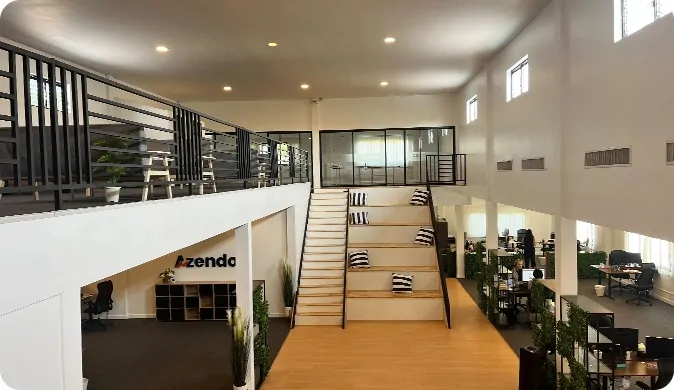
Choosing Azendo for your offshore staffing needs means selecting a partner dedicated to your long-term success. We understand that each business is unique, and we tailor our solutions to your specific challenges and goals. We collaborate closely with you to understand your vision, your current technical landscape, and your future objectives, ensuring that we provide the perfect team to drive your business growth. Our goal is to help you establish a sustainable and scalable offshore development team that empowers your company to achieve its full potential.
With Azendo, you gain access to a global network of talent, allowing you to efficiently and cost-effectively scale your development efforts. Our offshore staffing solutions provide a significant competitive advantage, enabling you to accelerate your development cycles, optimize costs, and deliver high-quality products and services to your customers. We are your trusted partner in building exceptional offshore development teams. Visit azendo.co to discover how we can help you build your dream team and unlock your global potential.
Finding the right people shouldn’t be a headache. As your dedicated offshore staffing partner, Azendo is here to make hiring simple, flexible, and effective. We provide a wide range of roles for our partners, ensuring you have the talent you need to succeed without the stress of traditional hiring.
No matter what specific role you are looking to outsource, we are ready to help. We know that every business is unique, which is why we don’t believe in a “one size fits all” approach. Whether you need a single specialist to help out or a full remote team to drive a major project, we support you through your entire outsourcing journey with our complete, 360-degree staffing services.
In our job index, you can browse through the many positions we are currently providing to our partners. We specialize in connecting great businesses with great people. However, our capabilities go far beyond just a list on a screen.
We are not limited to the positions you see listed. If you have a specific request or a unique need for a role that isn’t shown, we want to hear about it! We are happy to review any request for positions you are considering to outsource to an offshore staffing partner.

The page you requested could not be found. Try refining your search, or use the navigation above to locate the post.
The page you requested could not be found. Try refining your search, or use the navigation above to locate the post.

The page you requested could not be found. Try refining your search, or use the navigation above to locate the post.
The page you requested could not be found. Try refining your search, or use the navigation above to locate the post.

The page you requested could not be found. Try refining your search, or use the navigation above to locate the post.
The page you requested could not be found. Try refining your search, or use the navigation above to locate the post.

The page you requested could not be found. Try refining your search, or use the navigation above to locate the post.
The page you requested could not be found. Try refining your search, or use the navigation above to locate the post.

The page you requested could not be found. Try refining your search, or use the navigation above to locate the post.
A career in software development has long offered a wide range of opportunities and career paths. Software developers play a crucial role in designing and creating the software applications, systems, and solutions that influence almost everything we...